
How Does Snapscore Work? Full Snap Score Guide To Boosting Your Snapchat Activity
Quick Takeaways
A lot of people send snaps every single day and still watch their score crawl up at a pace that makes no sense. You open the app, fire off a dozen snaps to your friends, and check your profile an hour later, and the number barely moved.
If you have been trying to figure out how does snap score work and why it behaves the way it does, you are not alone. The system is not random, but Snapchat has never published a clean rulebook for it, which is exactly why there is so much confusion floating around.
The frustrating part is that most of what gets passed around online is either outdated or flat-out wrong. People assume chatting with someone adds to their score. Others think receiving snaps counts the same as sending them.
Some people grind streaks for weeks expecting a huge jump and get disappointed when the number barely shifts. The gap between what users believe and how the system actually operates is pretty wide, and nobody at Snapchat seems to be in a hurry to close it.
in this guide we’ve covered the real mechanics behind Snapchat score, what actions count, how much each one moves the needle, why your score sometimes freezes, and what you can do to grow it without getting your account flagged.
If you’re curious about Snapchat Planets, Snapchat emojis, or other features, take a look at our guide on Snapchat streaks and the web login method for a clear step-by-step explanation.
What is a Snapscore?
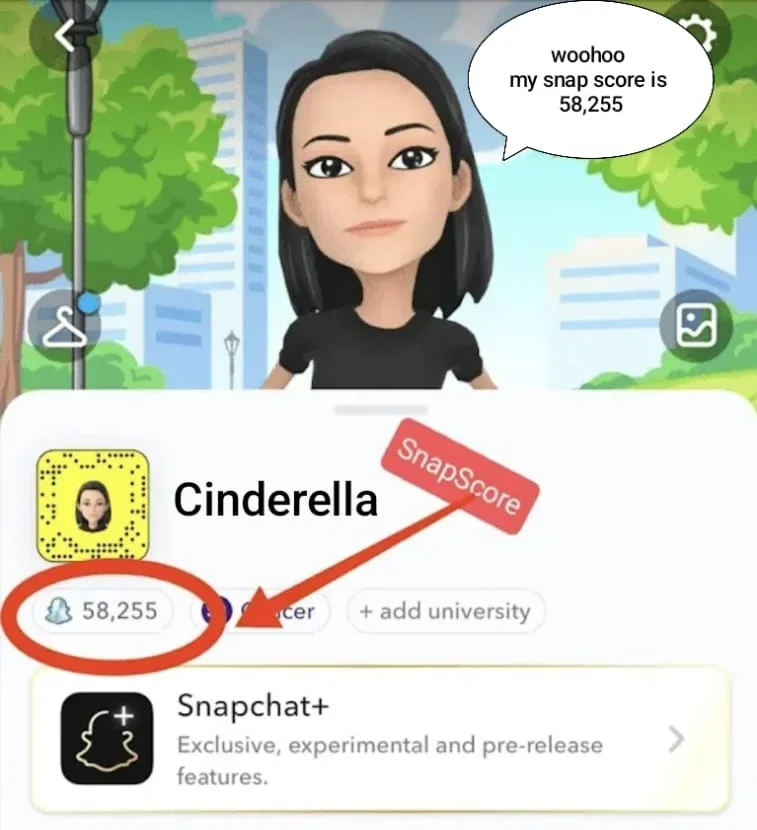
Your Snapscore is a number that lives on your Snapchat profile, visible to you and anyone on your friends list. It is a running total that reflects your overall activity on the platform. The higher the number, the more active you have been, at least in the ways Snapchat decides to measure.
Snapchat calculates the score using a formula that pulls in snaps sent, snaps received, stories posted, and a few other activity signals. The company has never released the exact breakdown, but through years of consistent user observation and testing, the general pattern is well understood. Think of it as a rough activity index rather than a precise point-by-point counter.
One thing worth knowing early: your Snapscore is visible to friends by default. If you tap on a friend’s profile, you can see their score, and they can see yours. It is not a private number, which is a big part of why people care about it so much in the first place.
Does a High Snapchat Score Give You Any Benefits?
For most users, a high score is more of a status signal than anything functional. Snapchat does not hand you direct rewards for hitting a certain number. You do not unlock filters, get extra storage, or receive any in-app perks just for having a score of 100,000 versus 10,000.
That said, score does carry real social weight among active users, especially in younger friend groups where Snapchat is the main way people stay in touch. A high score signals that someone is genuinely active on the platform. It is a bit like a social proof badge, not official, but recognized by anyone who uses the app regularly.
There is one meaningful exception involving Snapchat+, which I will cover later in this guide.
While Snapscore reflects your overall activity on Snapchat, there are also visual indicators that show your presence in real time. For instance, the Green Dot on Snapchat is a Snap activity indicator showing when a user was recently active, while the Yellow Dot on Snapchat points to new friend requests, unread stories, or notifications. Together, these features give your friends a better sense of how engaged you are on the app.
How Does Snap Score Go Up?
This is where most of the misinformation lives, so let me be direct about what actually moves your score.
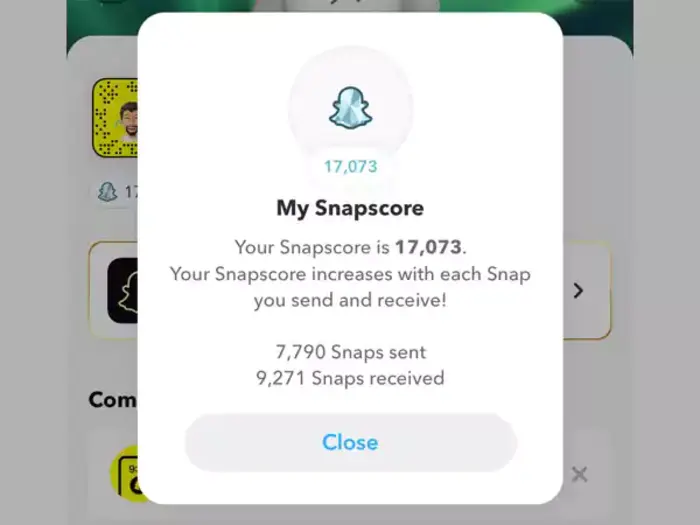
Sending a snap adds one point to your score. Receiving a snap also adds one point. That is the foundation of the entire system. Every photo or video snap you send to a friend or a group, and every one you receive, contributes to the total. It is a one-for-one exchange, and once you understand that, the rest of the mechanics fall into place pretty quickly.
Stories work a little differently. Posting to your Snapchat story adds points, though the exact value per story post is less consistent than the snap mechanic.
Some reporting suggests story posts add anywhere from one to several points depending on views and engagement, but the reliable takeaway is that posting stories does move your score upward, more so than most casual users realize.
Here is what catches people off guard about streaks. Maintaining a streak keeps you in the habit of sending daily snaps, which naturally stacks points over time. The streak itself does not hand you extra points beyond what the snaps themselves generate.
The score growth from streaks comes entirely from the consistent daily sending, not from the streak number ticking up.
How Does the Score in Snapchat Work?
To really understand the system, think about it in three layers: what counts, what does not count, and what affects the timing of updates.
What counts:
What does not count:
This is the part that trips up a huge number of users. Chats do not count toward your Snapchat score. Text messages sent through Snapchat’s chat feature, voice notes, stickers, and Bitmoji reactions—none of it adds to your Snapscore.
If you have been spending most of your Snapchat time in the chat tab, that is exactly why your score feels stuck.
This is the single most common misconception I have seen repeated across forums and comment sections. Someone spends an hour texting back and forth with a friend through Snapchat chat, checks their score, and wonders why nothing changed.
The answer is simple: chats are not part of the scoring formula, particularly if you are not pairing those conversations with actual snap exchanges.
What about receiving snaps specifically?
Yes, your snap score does go up when someone snaps you, even if you just open it without replying. Receiving a snap adds to your total the same way sending one does. So if a friend sends you ten photo snaps in a row and you open all of them, that is ten points added to your score; no reply is required.
Here is something that surprises most people: you can be completely passive and still grow your score, as long as active friends are snapping you regularly. That said, sending snaps back creates a loop where both people earn points on every exchange, which is far more efficient than one-sided receiving alone.
Timing and update delays:
Snapscores do not always update in real time. There can be a lag of a few hours, or sometimes longer, during periods of high server load. This is why you might send twenty snaps and not see your score jump immediately.
I noticed this firsthand during a stretch where I was keeping up multiple streaks at once. I sent and received around thirty snaps across two days, but my score only updated in chunks, a small jump here, a bigger one the next morning. Once you understand that the update is batched and not instant, the whole thing starts making a lot more sense.
Is There Any Maximum Snapchat Score?
There is no documented cap on Snapscore. Users have reported scores well into the millions, and a handful of highly active accounts have pushed past 100 million. The number can technically keep growing indefinitely as long as the account stays active and in good standing.
That said, there are practical limits to how fast a score can grow without triggering Snapchat’s spam detection. Sending a very high volume of snaps in a short window can look automated to the platform, which can slow down score updates or result in account warnings. More on that in the section below about growing your score safely.
If you have seen accounts online claiming scores of 500 million or higher, those are real, but they belong to people who have been extremely active on the platform for years, often maintaining dozens of streaks and posting stories daily across a very large friend network.
About Snapchat+ and Snapscore Multiplier
This is the section most snap score guides skip entirely, and it is worth your attention if you are a Snapchat+ subscriber or considering becoming one.
Snapchat+ is the platform’s paid subscription tier, available for a few dollars per month, and it unlocks a set of exclusive features. One of those features is a Snapscore boost, sometimes described as a multiplier, though Snapchat’s own description of exactly how it works is intentionally vague.
What users have consistently observed is that Snapchat+ members tend to see faster score growth for the same level of activity compared to free accounts.
Whether this is a true multiplier applied to each point earned or a periodic bonus applied separately has not been officially confirmed. What is confirmed is that Snapchat+ includes score-related perks as part of its feature set, and those perks are real.
If growing your score is a priority and you are already active on the app daily, Snapchat+ is worth considering. It is not the only way to grow your score, but it removes some of the ceiling on how fast you can progress. The subscription makes the most sense for people who are already snapping regularly and just want their activity to count a little more.
How to Check Snapscore
Checking your own score takes about three seconds. Open Snapchat and tap your profile icon or Bitmoji in the top left corner. Your score appears just below your username and display name. Tap it and Snapchat will show you two separate tallies: one for snaps sent and one for snaps received.
To check a friend’s score, open their profile by tapping their name in your chat list or on the friends screen. Their score will appear below their name, but only if they have added you back. You cannot see the score of someone who has not added you as a friend.
One thing to keep in mind: if you notice a friend’s score jumping by large amounts very quickly, that does not necessarily mean anything suspicious. Some people send snaps in batches, and score updates cluster together, so a single visible update can represent many hours of accumulated activity hitting the display all at once.
How to Increase Your Snapchat Score Safely
Most advice on this topic boils down to “just send more snaps,” which is true but not very useful on its own. The smarter approach is understanding which habits actually compound over time versus which ones waste your effort or put your account at risk.
Send Snaps Regularly
The main trigger for score growth is sending and receiving photo or video snaps. Consistency beats volume every time here. Sending five snaps a day for thirty days does more for your score than sending a hundred in one sitting and then going quiet for a week. Plain text chats do not count at all, so keep your exchanges visual and make it a daily habit rather than an occasional burst.
Add New Friends
Having more active friends gives you more chances to run two-way snap exchanges, and that loop is what really drives score growth. Adding random accounts does not help much if nobody snaps back, though. What actually moves the needle is connecting with people who are genuinely active on the app, even a small group of five or six consistent snappers makes a noticeable difference compared to a large list of silent contacts.
Post Stories Often
Stories are one of the most underused score-building tools on the platform. Every story you post adds to your total, and it takes about ten seconds to do. A quick photo or short clip posted daily stacks up more than most people expect over the course of a month, especially when combined with regular snap exchanges.
Keep Snapstreaks Alive
Exchanging daily snaps with the same friend builds a streak, and streaks keep you locked into a consistent sending habit. The points do not come from the streak itself but from the daily snaps that maintaining it forces you to send and receive. If you go the extra mile and keep streaks running with multiple friends at once, the compounding effect on your monthly score is very real.
Open Every Snap You Receive
Do not let snaps sit unopened in your inbox. Opening a snap counts toward your score the same way sending one does, so leaving them unread means leaving free points on the table. Make it a habit to clear your inbox daily, particularly if you receive snaps from multiple friends regularly.
Return After a Break
Some users notice a small score bump after coming back to the app following a period of inactivity. Snapchat appears to give a mild boost to returning users, possibly as an incentive to re-engage with the platform. It is not a massive jump, but it is a real pattern that enough people have observed consistently to be worth knowing about.
Try Snapchat+ (Optional)
Snapchat+ includes a Snapscore Multiplier that doubles the points you earn when exchanging snaps with other subscribers. If several people in your regular snap group are also on Snapchat+, this adds up faster than you might think. It is not a requirement by any means, but if you are already active daily, it makes your existing habits count for more without changing anything about how you use the app.
One thing to avoid is blasting the same snap to a long list of contacts at once. Snapchat’s systems detect patterns that look spammy, and bulk sending the same image repeatedly does not generate the same point value as genuine exchanges.
It can also get your account flagged for unusual activity, which slows your score updates or triggers a temporary restriction. The safest path is unique snaps, real back-and-forth exchanges, and showing up consistently every single day.
Why Your Snapscore Isn’t Going Up and What to Do
A stalled Snapscore is usually one of three things, and once you identify which one it is, the fix is pretty simple.
First, you might be sending mostly chats instead of snaps. This is the most common cause by a wide margin. If your Snapchat habit has drifted into mostly texting through the chat screen, your score will not reflect any of that activity. Shift back to sending actual photo or video snaps, and you will see movement within a day or two.
Second, there could be a server-side delay. Snapchat sometimes takes several hours to update scores, and during heavy traffic periods it can stretch even longer. If you sent a batch of snaps and the score looks frozen, wait until the next morning before assuming something is broken.
Third, your account might have a temporary flag on it. This can happen if you sent a very high volume of snaps in a short period or if Snapchat detected behavior that looked automated. In most cases the score will start moving again on its own after a day or two of normal use.
There is also a quieter reason scores stall that does not get much attention: your receiving end dried up. If the friends you usually exchange snaps with have gone less active, your incoming snap count drops, and with it a solid chunk of your daily point gain. Expanding your active snap network, even by adding a few consistent friends, fixes this faster than most people expect.
FAQs
Conclusion
A Snapchat score is a simpler system than most people think, but the confusion around it is real because the platform never clearly explains the rules. Once you know that only snaps and stories count, that chats are completely excluded, and that updates run on a delay, the number starts making sense.
The users with consistently growing scores are not doing anything complicated. They are sending real snaps to active friends, posting stories regularly, and not disappearing from the app for weeks at a time. That pattern, kept up over months, builds a score that reflects genuine activity rather than short bursts of effort.
If your score has been stuck, take a look at whether your habits have shifted toward chats. That one change, moving from text exchanges back to actual snap exchanges, is usually all it takes to get things moving again.

I’m Vanessa Harrison, a Snapchat and social media specialist, as well as a content writer passionate about helping people make the most of their online presence. I create engaging, easy-to-follow content focused on Snapchat and social media trends, tips, and strategies. At Planet Snapchat, I combine my experience in social media with clear, informative writing to help readers stay updated and get the most out of their digital interactions.